Showing posts with label stories. Show all posts

Tuesday, October 20, 2015

No Reservations: In Search of Native America


I’ve seen a decent number of tribal peoples over the years - from the jungles of Latin America (Maya, Kuna, Piaroa, Yanomami, Quechua… to name a few) out to the savannas of Africa (Hamar, Mursi, Karo, Maasai, Tuareg… I could go on) and even around various expanses of Asia (Banjara, Kayan, Shan, Hmong, Yao... ok, please stop me). The world surely has no shortage of aboriginal communities, even if their individual populations are ironically under the perpetual threat of decline. While the ethical question of “ethno-tourism” continues to remain a controversial and heavily debated topic on travel forums, I grew up possessing a natural curiosity and strong fascination for indigenous societies that could only be satiated by seeking them out. Though informative and educational, books and documentaries would never provide me with the level of understanding comparable to physically interacting with and learning directly from tribal members about their unique ways of life.

In light of the many tribes I’ve visited, it sadly dawned on me that I’ve never actually encountered the original inhabitants of my very own country. The United States government officially recognizes more than 500 distinct native groups, none of whom I’ve ever crossed paths with. How is this possible? Indeed, recent history has not been kind to Native Americans, whose once flourishing civilizations have been devastated by disease, enslavement, eviction, and even genocide at the hands of Spanish missionaries and American settlers. More shamefully, it’s a story that’s still not mentioned as part of the standard secondary school US History curriculum. Nevertheless, I've always had questions in the back of my mind concerning the state and views of these elusive minorities. I knew they’re certainly still around – but where exactly?

My mission to find Native American people and learn something about their current condition first started off locally. After extensive research online, I came across a small inter-tribal gathering taking place out in the Los Padres National Forest near Santa Barbara, California. Originally starting out as a small, intra-tribal occasion for feasting and ceremonial dances, the concept of the powwow has transformed into an organized convention open to all tribes across North America. It has become a celebratory opportunity for clans to meet, socialize, sell handmade art and the raw materials for crafts, as well as participate in competitions of dancing, singing, and drumming. Such a cultural event was certainly worth making a three-hour journey for, hoping it would grant me a chance to engage in some casual dialogue with a people I’ve known only from outdated books and poorly-misrepresented films.

Members from many different tribes dancing around the circular arena to the beat of thunder drums
A Chippewa Cree elder from Montana
One of the Great Plains natives


My anthropological senses tingled with excitement as a colorful whirlwind of natives in full-feathered regalia orbited around a dirt arena. Like the cracking boom of thunder, massive drums were communally struck by circles of men from the Northern and Southern Cree, their shrill ululating singing evoking the image of ax-wielding war parties racing across the Great Plains. I started conversing with a Navajo woman standing majestically in a colorful shawl, her hair woven into two archetypal black braids with a single erect feather at her apex.
“That’s my son on the far side of the circle. He’s competing for the Fancy Dance. Watch his footwork as the drum gets faster. When it stops, he’ll strike a pose!”
Like any mother, she was proud to showcase the skills of her son, performing a dance that isn't even traditional to the Navajo people but rather to the tribes of the Midwest. It made me consider how a wave of Pan-Indianism over the last century has brought very different and often distant tribes together to form a unified indigenous identity built upon shared cultural practices. At only 1.5% of the US population, it seemed logical that Native Americans from all over the continent would find strength through the unity embodied by the powwow. Even as an outsider myself, I began to feel the power of the circular arena as it drew people from as far as central Canada and Mexico closer to its pulsating center. 


The Navajo woman's son performing the fast-paced and visually-stunning Fancy Dance

The regal Navajo woman could sense my delight, which in turn delighted her.
“I’m pleased you’ve come all this way to see our traditional dancing. You’re most welcomed to join us in a week for another gathering near the San Manuel reservation. These competitions tour around the country all summer. We’re like a bunch of traveling circus freaks!” 
The hosts of the Los Padres powwow were from the Chumash tribe, whose people have lived along the California coast for millennia. I came across one of its members, a ruggedly handsome man sporting a coyote pelt headdress and leather loincloth decorated with owl feathers. Intimidating as he looked, I eventually gained the courage to approach him.
“I've always been curious. What’s your view on having visitors, particularly white people, coming to your cultural events and watching sacred dances that had long been performed  for native eyes only?”
I tried to state my question delicately, particularly in remembering my own status as a visitor. Taking a bite out of my fry bread, I was fixated.
“History has not given our people much reason to trust outsiders. It used to be illegal to gather and dance like this only a hundred years ago. At first I didn't know how I felt, but now I want outsiders to see this. I really do. They need to know that we still exist and that our heritage is strong, rich, and ancient.” 
Thrilled from additional conversations with members of the Lakota and Sioux, I followed up on the Navajo woman's offer and went to the second gathering a week later. It felt delightfully strange suddenly running into so many native "friends".

The Chumash man I briefly interviewed
Other Chumash tribal members in traditional clothes


Woman performing the Shawl Dance

Checking the powwow off my list, I later realized that my chances of coming across whole native communities would likely fair better outside of over-developed, over-populated California. Growing up with a plethora of archaeology books as a child, I'd always read stories about the mystical treasures of the American Southwest, from enigmatic petroglyphs on canyon walls to lost stone cities built into hidden cliffs. The intricate folk arts of the Puebloan peoples had likewise always been admired by my family and I hadn't forgotten that Christmas holiday was soon approaching. On a whim, I decided to set out on my most distant solo weekend road trip to date: Arizona.

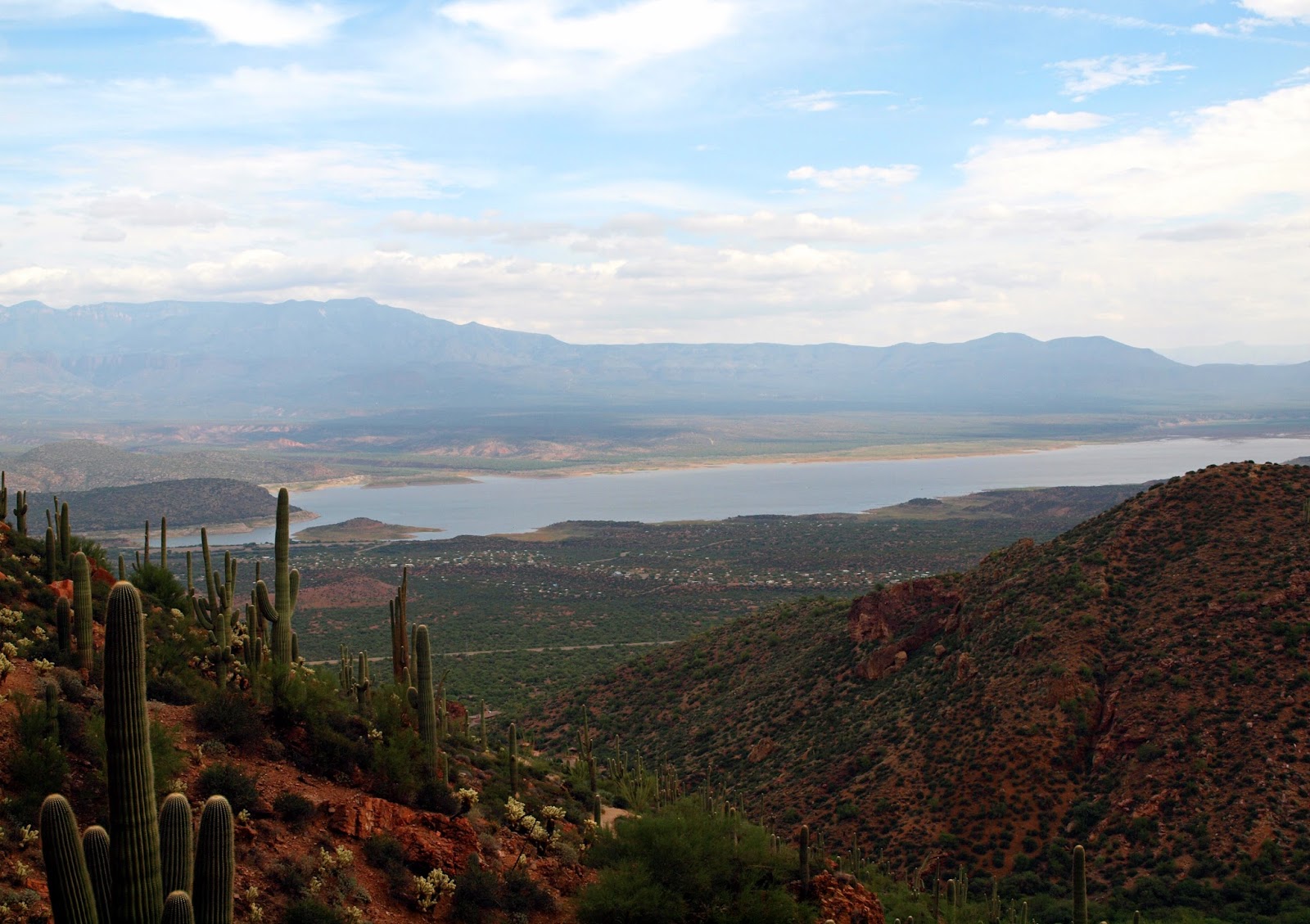
Aside from suddenly dropping in and staying with Andrew, a friend and doctoral student of anthropology at ASU who I happened to have met while visiting the Kuna tribe in Panama, I had no set plans regarding my Arizonan adventure other than seeking people and pottery. Little did I know that, in exchange for nearly a thousand miles of driving in only two days, so much would be discovered and learned in such a brief time. I first headed east from Phoenix along winding highways that cut through the red rocky cliffs of the Superstition Mountains. After two hours, I found myself in the Tonto National Forest, which resembled more of an endless cactus garden than the kind of forest I was familiar with. 

Visiting Andrew and sharing tribal encounter stories
20 foot high saguaro cacti shooting towards the sky in front of the sandstone butte
View of the Tonto Basin and Roosevelt Lake
Tonto National Monument, a 13th century Salado cliff dwelling hidden in a natural alcove

It was up above, snugly hidden into the natural alcove of a sandstone facade where I gazed upon the 13th century ruins of a Salado cliff dwelling. I squealed with excitement, nearly walking straight into a massive saguaro cactus as I scrambled up the mountainside. It was no Mesa Verde, but being my very first cliff dwelling, I was certainly in awe of the small adobe and stone structure that has remained perched above the valley for centuries. Waiting for me at the top was Ranger Miller, who greeted me with a charisma and energy comparable to that of my best friend, Captain Matt. Standing among the stone walls of an ancient Native American site with such a vivacious and passionate character, it's no surprise that we talked for nearly forty minutes about the history and archaeology of indigenous peoples in the region. Ranger Miller waved his arms in large, epic sweeps across the open landscape.
"The Salado were not a single culture, but rather a diverse melting pot of natives from different ethnic and linguistic backgrounds that lived and worked together. This place was already an 'America' long before our notion of 'America', and a great mixed civilization occupied the entire Tonto Basin."
He stretched his hand out over the vast Tonto Basin below us, pointing in distant directions to where other large dwellings and villages had been discovered. The idea of an ancient indigenous melting pot gave me a cheesy grin, as I reflected back to the powwow in California and how I was fortunate to experience a contemporary tribal smorgasbord. Before departing, Ranger Miller jovially suggested that I visit the ruins of Besh-ba-gowah in the little town of Globe en route back to Phoenix.

Inside the ancient pueblo, which comprised of multistory stone and adobe structures
View from within the alcove. Notice the grinding stone.
Detail of the original adobe and wood construction


Ancient Salado pot, gourd spoon, and stone axe
Spent the morning discussing Ancestral Puebloan archaeology

Arriving in Globe, I anticipated to see a small desert town of little significance with a couple streets and quiet rural atmosphere. What I surely didn't expect to see was a bustling town center filled with native people, ceremonial dancing, and artisan booths. I had coincidentally stumbled into the Apache Jii Festival, celebrating the performances, arts, and food of the Apache nation. And reminiscent to the environment of the Salado era, other neighboring tribes including the Navajo, Hopi, Zuni, and Pueblo peoples also joined in on the festivities to create a living indigenous melting pot right before my very eyes.


Performing the Hoop Dance, which involves literally jumping through hoops and making abstract shapes with them
The Apache Crown Dance, invoking and imitating the spirits of the mountains

After watching the Apache crown dancers, whose playful movements aim to emulate the frolicking of mischievous mountain spirits, I walked along the streets to look at amazing works of tribal art and speak directly to the artisans keeping such traditions alive. A young Hopi man in his early twenties caught my attention as he sat at his small little table, carving away at little logs with nothing but a pocketknife and a small chisel. He was meticulously making authentic Kachina dolls in the old style, using the sacred cottonwood root as the main medium for the abstract spirit effigies. He captivated me with his story.
“I watched my uncle carving these gods when I was little and realized that I also wanted to learn. I’ve tried getting other friends to join me, but they don't always care. Sometimes I feel like it’s all on just my shoulders to keep our dying ways alive. It’s hard work, but it gives me honor and purpose.”
We discussed the beauty and challenges of maintaining traditions in a rapidly globalizing world. I admired him even more for his commitment at such a young age towards preserving his culture, rather than slipping into despair and alcoholism that frequently infects disadvantaged native boys. He explained to me the magic of Kachina dolls and the pantheon of natural spirits they represent.
“We all still follow the old religion. The Spanish tried to give us their God, but we already got our own – and there’s a lot, man! We don’t need Christianity and churches because our gods are everywhere with us, in the earth and sky, in the plants and animals. All things have its own sacred spirit that deserves respect.”
We talked for nearly half an hour. It amazed me to see how a young, humble woodcarver was capable of possessing a spiritual profundity and appreciation for life more advanced than many of my privileged friends back at home. I knew at that moment that if I was going to come home with an authentic Hopi "spirit", it wouldn't be from a souvenir shop or a fancy Indian art gallery back in Phoenix. It was going to be straight from the hands of this native kid, right on the street, at a native cultural festival in historic Apache territory.

The young Kachina carver demonstrating his art

As I made my rounds, I came across a Hopi-Zuni couple selling exquisite handwoven baskets. The woman had the roundest, most jovial face I've seen since my time in Mongolia. She playfully insisted that I needed a nice genuine yucca fiber basket to carry my newly-acquired Kachina. I instantly felt compelled to chat.
“What’s it like living on a reservation? Aren’t they considered autonomous areas by the government and does living there have benefits?”
Chucking uncontrollably and looking over to her smiling husband, she was clearly amused by my questions, likely not the typical inquiries made by potential customers.
“Even though we can make our own laws, life on the reservations can be a challenge sometimes, especially if your tribe is small and your village is poor. But nothing can be more rich than the sense of community and shared traditions you gain by staying with your people. That, and we also don’t have to pay state tax. That’s definitely a perk when you buy a new car and have it shipped!”
We talked for 15 minutes about Native American everyday living, after which I walked away with a wonderful little basket. It felt satisfying to directly support an indigenous artist who provided not only a beautiful and authentic piece, but a wonderful conversation and story that will forever accompany it.
“Please come visit us on the Hopi reservation! We live on top of the mesas [elevated sandstone plateaus] and still have our colorful Kachina dances during village festival days. We don’t permit photography out of respect for our community's personal privacy, but you're still absolutely welcomed. We’ll even bake bread for you, too!”

Buying native Southwest art and gifts directly from the artists in the small town festival

My final stop was a stall selling intricately painted Towa pottery. Beside the collection of handmade vases, all painstakingly made using the archaic coil method and decorated with complex geometric patterns, large lumps of clay oven baked bread were quickly being sold. I gently interrupted two middle-aged sisters chatting in a beautifully incomprehensible language beside an old grandmother who spoke no English at all.
“I’ve come all the way from Los Angeles in search of native people. I feel like none of you guys are left!”
The stall erupted with laughter at my sincerely honest exclamation, which they apparently found to be rather adorable. 
“Yeah, it’s been a rough couple hundred years, but we’re all still here. We’re not going anywhere, either. And unlike the movies, we’re pretty darn friendly. We won’t bite!”
The sisters looked at each other, letting out a giant guffaw that also infected the neighboring Navajo stall with laughter. We talked more about their particular culture, an obscure one based over in neighboring New Mexico that I had never even heard of before meeting them. 
“Out in Jemez Pueblo, we speak a language that no other people speak anywhere else. We still live in our adobe homes stacked one on top of another. Some people even live the old way, without running water or electricity. It's okay, I guess. When you live by the sun, you tend to go to bed kinda early, haha.”
The stereotypical portrayal of Native Americans as being a stoic, fierce, and somewhat cold race was completely debunked by the smiles, laughter, and witticisms of the people I spoke with that entire day. As a result of their limited presence in mainstream American society, it's easy to envision them as being mythical and secretive. But for the most part, I came to the realization that Native American people are quite open and really not that different from the rest of us, facing the same ease and challenges that accompany everyday life for all citizens. Out in the middle of rural Arizona and hundreds of miles from home, it was such a pleasantly surreal Saturday afternoon spent at an outdoor native marketplace among strangers who could effortlessly be transformed into friends. All it took was a little respect mixed with a lot of interest. I also walked away with a beautiful ceramic pot.

The rugged cliffs and buttes of the Superstition Mountains

Gold Canyon during a brief rain and lightning storm

Before journeying back to the mundane world of strip malls and cultural indifference, I heeded the words of a Navajo petroglyph artist who recommended a special place to see large concentrations of ancient rock art. Making a full circle back towards the Superstition Mountains, I pulled off the highway and headed towards a large butte overlooking the vast, flat landscape around Gold Canyon. After getting lost, I found the trailhead and set off over a rocky path up towards a gully filled with boulders. Caught in a brief desert downpour, it felt refreshing to soak in the cool heavy rain and inhale the moist earthy aroma of wet sandstone. A bolt of lightning flashed across the expanse of the desert sky, followed by a low rumble echoing off the cliff face. I thought about what the Kachina carver told me and felt that the spirits of the mountain were home, probably welcoming me to their sacred space. 

It was a sacred space, indeed. High in the gorge, natural rock pools had filled with water from the downpour and dry vegetation had sprung to life again through beautiful shades of green interspersed with vibrant hues from wild flowers. I snaked my way through the boulders, turned around a narrow bend, and came face-to-face with a massive stone edifice covered in innumerable 900-year-old Hohokam petroglyphs. Carefully scaling the precarious cliff side, I found more and more pictographs around every corner and in every crevasse. I felt as if I had wound up in a prehistoric art gallery filled with etched images of wild sheep, coyotes, lizards, anthropomorphic beings, star signs, and abstract geometric patterns. Having the entire hidden canyon to myself, I was completely overcome by the mystique and sanctity of a place that clearly possessed spiritual significance to the ancient ancestors of those whom I met earlier that day. I cleansed my face and hands in one of the natural pools, imagining the purity of the place washing away my stress and negativity. It was the perfect conclusion to a meandering journey in search of native America.

Standing beneath the great stone petroglyph slab showing herds of grazing animals
Abstract designs of unknown meaning


Lizard men


Man on top of a coyote or dog

A long-horned wild sheep


Star signs and organic shapes of unknown meaning

Looking down into Gold Canyon


Ancient Hohokam rock shelter in the valley


The sacred pool beneath the wall of petroglyphs, an oasis giving life to an otherwise deathly dry terrain
  
Spending time with some of America's last vestiges of a real indigenous communities was eye-opening, informative, and also quite entertaining. It returned a sense of exoticism to a country that I have consistently been overlooking while on my annual search for unique historical locations and cultural experiences. I learned that Native Americans still persist, that they are just as unique and worthy of admiration as the other tribal peoples I've come across during my travels. As long as personal spaces are respected and cultural boundaries are observed, native people throughout the world can be exceedingly welcoming and proud to share their customs with those who have strong interest in their preservation. Treating people as people, rather than creatures simply to be gawked at, stereotyped, or exploited, can yield some surprisingly meaningful moments of genuine human connection.        


Thursday, February 12, 2015

What the Kitchen God Told Me: Family Stories & Vietnamese New Year

The room was dimly lit in the candle light, the smoke of incense wafting gently over a makeshift altar of fruits and flowers gracing the counter-top. In the near dark, I sat waiting for his return, unsure as to how he would appear.  
 "What are you still doing up?! Go to bed!" 
 My father flipped the switch, startling me like a deer in the headlights. He looked angry.  
 "Baba, I'm waiting for Ông Táo!"
Many would claim that my childhood was nothing short of an unusual one. It was the night of a new moon and rather than spending a mindless evening in front of the television, I attentively waited for the arrival of the Kitchen God. I know, the concept sounds laughable. But if my classmates had no qualms looking out for a pot-bellied man plopping down their chimneys, or keeping one eye open for some magical woman with a tooth fetish, waiting for Ông Táo suddenly didn't seem so ludicrous. The benevolent Kitchen God, keeper of the hearth and protector of the home, has been our family friend for a good two thousand plus years. Every year on the eve of Tết, the Vietnamese lunar new year, the Kitchen God would pay a visit to our home before returning heaven-bound. It was only proper etiquette to welcome this faceless guest with offerings of citrus fruits, hot tea, sweet narcissus flowers, and aromatic incense. Milk and cookies are for chumps. 

What intrigued me the most about the Kitchen God was his role as a celestial messenger, reporting back to the Divine with stories about every household from over the past year, and evaluating whether our deeds warranted the bestowing of blessings over the next. Anyone who knows me well would know that I absolutely love a good story;  and if this spirit has held this job since the dawn of time, it seemed certain that he had plenty to divulge. What could he tell me about my obscure paternal family history and culture? What could he teach me about rich Vietnamese new year traditions and mastering the art of hospitality?   

Altars to spirits and ancestors play key roles in Vietnamese spirituality

As neither of us could sleep, my father gave in and let me wait. In the meantime, he recounted to me a few family stories. As a kid growing up in a country ravaged by war, he had a library of tales that never ceased to shock and awe. Unspeakable crimes were committed during those times, particularly following the 1968 military attacks known as the Tết Offensive, a string of atrocities that ironically began on what was supposed to be a joyous lunar new year holiday. While many of his tales were heartbreaking tragedies of physical struggle, family dissolution, and miserable deaths, a few anecdotes were "uplifting" enough for the ears of a 10-year-old. He supplemented his stories with what few photographs were able to survive both the war and a severe typhoon (95 percent of the family's photographic heirlooms apparently sit on the seabed of Hong Kong harbor).

It wasn't uncommon for children growing up in war zones to go without proper supervision, for parents had bigger issues to contend with as the country began to spin out of control. Living in a tumultuous environment as an odd and inquisitive 10-year-old himself, my father's idea of playtime included the making of homemade Molotov cocktails that he and his friends could explode in the street against enemy kids from rival neighborhoods. One evening, after dropping a bottle of kerosene near an oil lamp, he watched my grandmother's kitchen rapidly go up in flames. Fleeing the scene in panic, he stopped in his tracks when he realized that the family cat was still trapped inside.
"I couldn't just leave little Gù behind. He was my only friend." 
As a bullied child who always kept rocks in his pocket to fend off bigger kids, he quickly befriended the only creature that could give him unconditional love. He ran back into the scorching room to retrieve the frightened feline before making a clean getaway. In some bizarre twist of fate, a nearby counter-government faction fired an anti-tank missile through the courtyard wall that effectively destroyed the back half of the residence, possibly mistaking a flickering light bulb in the house for an encoded signal. My father still thinks about how he could've ceased to exist that day. But he simply sat back in the chair and chuckled.  
"I was so relieved the kitchen got bombed. If Bà Nội ever found out I burned it down, she would've spanked the life out of me!"


My father's family picnicking in the highlands of Da Lat, c.1958
My father (center) with grandmother in Saigon's central garden, c.1961
My father at age 7
The family cat, Gu ("Hunchback")


While my father felt heroic for saving cats from burning buildings, the war ultimately witnessed the emergence of real heroes in our family. He told the story of Uncle Dương, who had bravely fought in the South Vietnamese army against the encroaching Marxist northerners. Captured by the Việt Cộng, my uncle spent 10 years imprisoned in a concentration camp somewhere in the jungle. He was bound and isolated to solitary confinement within a dark bamboo shack for days on end, starvation forcing him to capture and devour any lizard or beetle that crawled within reach of his emaciated body. Following forced "re-education" at the hands of communist propagandists, he was eventually released and nursed back to full health (albeit one finger and half an ear less). Years later, he found himself struggling to survive yet again, though this time as an immigrant factory worker in the United States after having fled and being granted asylum. For years he labored (and lost more fingers) in the industrial sector to support his family, ultimately saving enough to put Cousin Châu through the prestigious University of California for a real education.  
"I never wanted my daughter to know the pain of hunger. Her success was worth my every sacrifice."

Only surviving photo of Uncle Duong

My uncle endured and overcame nearly 20 years of turmoil, though not everyone was as lucky. The story of Aunt Quynh's escape during the Fall of Saigon has always traumatized me with its graphic nature. When the communist army finally captured the city, panicking civilians scrambled to gather their families and flee, with so many lives lost or left behind in the utter mayhem. My aunt out-clambered countless others onto a fishing boat frantically setting off down the Mekong river towards the sea.  
"I don't like the word F.O.B. ["fresh off the boat"] used in this country. I was one of those miserable people."
Even international waters weren't safe. Days into the journey, the overcrowded boat was captured by pirates who robbed them of what little they had, then slaughtered the captain and innocent passengers. Instinctively, my aunt took the hands of a few children and silently hid with them in a cargo hold beneath the blood-soaked deck.  
"I didn't know them and they didn't know me. But it was the human thing to do in spite of such inhumanity." 
The pirates left the boat to drift aimlessly in the ocean until it eventually washed ashore off the coast of Thailand, where my aunt later lived in an overflowing refugee camp. While she now lives a comfortable life with her family in Orange County, a long overdue blessing for good karma, the fortune she gained would never make up for the faith she had lost in mankind.


Aunt lighting firecrackers for new year

Every story in my father's collection seemed depressing enough to make even a licensed therapist question the mental health of our entire family. Even his own adolescence was marked by hardship, separated from his parents and surviving independently as a teenage refugee in Taiwan, while caring for his sisters and struggling with English to get through school. But not all of his narrations were the tragic products of war. In the joyous spirit of the coming new year, my father had much to share concerning our rich cultural history dating back to a time when Vietnam was unified and relatively at peace. Orally translated from my grandmother's recollections, he also recounted to me wondrous tales of our family's elevated status amongst the nation's ruling elite, during the last decades of Vietnam's imperial age, stories that had long been kept from me as a result of unfortunate linguistic barriers between me and my grandparents.


  The following are rare photos taken by Uncle Khánh, a year before the fall of Saigon


One of countless mobile roadside street food stalls
Old woman selling shoes on the sidewalk
Rows of motorbikes in the downtown shopping district
The main boulevard in downtown Saigon

My great-grandfather, Lê Văn Chạc, was a respected nobleman and mandarin, or royal official and bureaucratic scholar, in the imperial court of Vietnam's last rulers, Emperor Khải Định and Emperor Bảo Đại. He succeeded as one of the last individuals in history to take and pass the notoriously rigorous Confucian Imperial Civil Service Examination, an intellectual legacy that had spanned across East Asia for nearly 1500 years before its end in 1919. Throughout the course of his lofty career in the early 20th century, he assumed a variety of positions that elevated from the rough Western equivalents of sheriff to district attorney to court judge, before ultimately being selected by the emperor as quan tỉnh, or provincial ruler over what was at that time the provinces of Kiến An, Hà Đông, and Hải Dương, northern areas that today stretch between Hanoi and Haiphong.
"Your great-grandfather used to carry a sword and ride off on horseback with his troops to catch bandits in the highlands. Then he'd preside over the trial and later deliver the punishment. He was a one-man show of imperial justice!"
My father exclaimed with a wide-eyed sense of pride. I was completely entranced.  
"Was it exciting like the Wild West, Baba?" 
He slowly sipped his tea and took a dramatic pause before chuckling.  
"So much more than that. We're talking about the Wild East."  
The exoticism and romantic nature of my family's history was veritably cinematic. I learned that my great-grand uncle married into the royal family itself, to a lesser princess sporting the title Công Tằng Tôn Nữ, reserved solely for the great-granddaughter of the dynasty's second monarch, Emperor Minh Mạng. But traditional court life still thrived even during the youth of my grandmother. As a teenager, she would hear pulsating thuds emanating from distant drum towers raucously relaying a signal from one village to the next announcing the emperor's approaching entourage. In the days leading up to the new year festival, the emperor would pay visits to the provinces to ensure that order was being maintained and that the people were properly being served by officials like my great-grandfather.  My father told me stories of summons to the Forbidden Palace of the Nguyễn Lords in the old capital of Huế, when great-grandfather would don dazzling robes of embroidered silk brocade and pay his respects to the royal family through elaborate Confucian rituals, held in courtyards flanked by fearsome dragons and qilins. He spoke of great-grandfather holding public audiences in our own lavish family estate, and the tribute that villagers and aristocrats alike would bring, from offerings as humble as rice, wine, and animals to treasures as fantastic as gold ingots, jade carvings, and towering porcelain vases. A stone tablet was even erected in the district of An Dương to commemorate the people's satisfaction with great-grandfather's governance, even while growing discontent across the nation began to loom over the weakening Nguyễn Dynasty, now a puppet of colonial powers. Despite the exploitive interference of French colonization, followed by increasing Japanese aggression during World War II and the rise of communist insurgents, the Viet people have always managed to make time for festivals celebrating their heritage and their blessings. One colorful celebration in particular outranked all the others in terms of cultural identity, spiritual unity, and national pride - the lunar new year.


Great-grandfather in traditional attire
Great-grandfather archival photo


Mandarins in ritual attire


Gateway to the Forbidden Palace of the Nguyễn Emperors in Huế
Performing royal court music in the throne room, where my great-grandfather would prostrate before the emperor
Northern villages haven't changed much since my great-grandfather's days
Living up to my mandarin roots?


My father always felt that the Western concept of new year was somewhat of a joke.  
"I never understood it. Everyone frantically gets fancy after work, counts down a couple seconds to a dropping ball, then BAM! - no one remembers a thing the next day." 
As a time of year that possesses so much significance in terms of renewal, physical rejuvenation, and spiritual reawakening, he couldn't understand why Americans would reduce the transition to something hasty, meaningless, and anticlimactic.  
"Just like on freeways, Americans are always in a damn rush. When they finally reach the start of a brand new year, they go and plow a water buffalo right through it."
 
Vietnamese water buffaloes, for the sake of analogy


He had a valid point. The West only truly celebrates in the final few seconds between 11:59 pm and midnight. In Vietnam, however, the festivities go on for nearly four days, not including the days of exciting preparations that precede the actual date. Every moment is an intimate experience not only with family and friends, but with society as a whole. Imagine throwing the ultimate block party of shameless gorging and drinking, explosive firecracker lighting, playful gambling, and rowdy lion dancing - except the entire nation shows up and no one leaves for a week. 

But the new year festival is about so much more than merely having a good, rambunctious time. It is an invaluable facet of ethnic identity, an ancient springtime celebration steeped in ceremony and symbolism that satiates not only physical senses but metaphysical senses as well. Whether performed in a temple or in one's home, the rituals of Tết are a commemoration of the past and an anticipation towards the future, both simultaneously occurring in the sacred present. It is a genuine thanksgiving for blessings that have come and have yet to come. As my father eloquently explained,
"Tết is about honoring and expressing gratitude towards four blessings, without which your life would be futile: your ancestors, your family, your mentors, and your friends. It's not about making wishes for yourself, but rather asking for fortune, prosperity, and longevity to be granted to them. And hopefully, they'd love you enough to wish the same"
Why limit these amazing tenets to an annual holiday when they could ideally serve as the foundation for life-long principles? Ancestral "worship" is the cornerstone of all East Asian cultures. Unlike intangible gods with questionable existences, the ancestors were real people to whom we offer praise and devotion for the very gift of our own existence. We simply would not be were it not for them. We visit and give thanks to our family for being the support system that we can always rely on through the binding contract that flows through our veins. The sacrifices of our parents and grandparents are priceless, selfless gifts made to ensure a better life for us all. Unlike in the United States, teachers and mentors are some of the most revered and elevated people in society. We visit and bring gifts to those who are so gracious to share with us their knowledge and help us on the path towards any form of enlightenment. Finally, we honor and open our homes to friends and neighbors, whose trusted presence make the hardships of life bearable if not inconsequential. In some cases, the fine line between one's friends and one's family can be as thin as a silk thread.

A typical Vietnamese neighborhood of friendly homes and family-run shops emits a lovely communal ambiance

New year fruits and flowers represent wealth, abundance, and renewal
Ancestral altar to an ancient general
Men dressed in traditional áo dài


Children are always enthralled by the magic of the lion dancers
Many people make pilgrimages to sacred temples during Tết, including the holiest Chùa Hương (Perfume Pagoda)


When I moved to Southern California for my graduate studies, I knew I would have to leave my family and the festivities behind. It wasn't until later when I realized I didn't necessarily need to leave behind my traditions. After slowly establishing a life and accumulating a very close crew of friends, I decided to openly share the beautiful customs of Tết. And it all began with two friends and a large box from the Vietnamese market.

I could hear Captain Matt locking up his bike to my patio railing, followed by a gentle tap on the back door. I had just made a rare purchase that set me back a hefty 65 dollars, yet I wanted nothing more than to share it with him and our friend, Ankoor. They anxiously inquired about it, though their anticipation quickly changed to perplexity.
"You seriously spent that much money on... fruit?!"
"Not just any fruit. Special new year fruits I grew up eating, imported all the way from tropical Vietnam to you!"
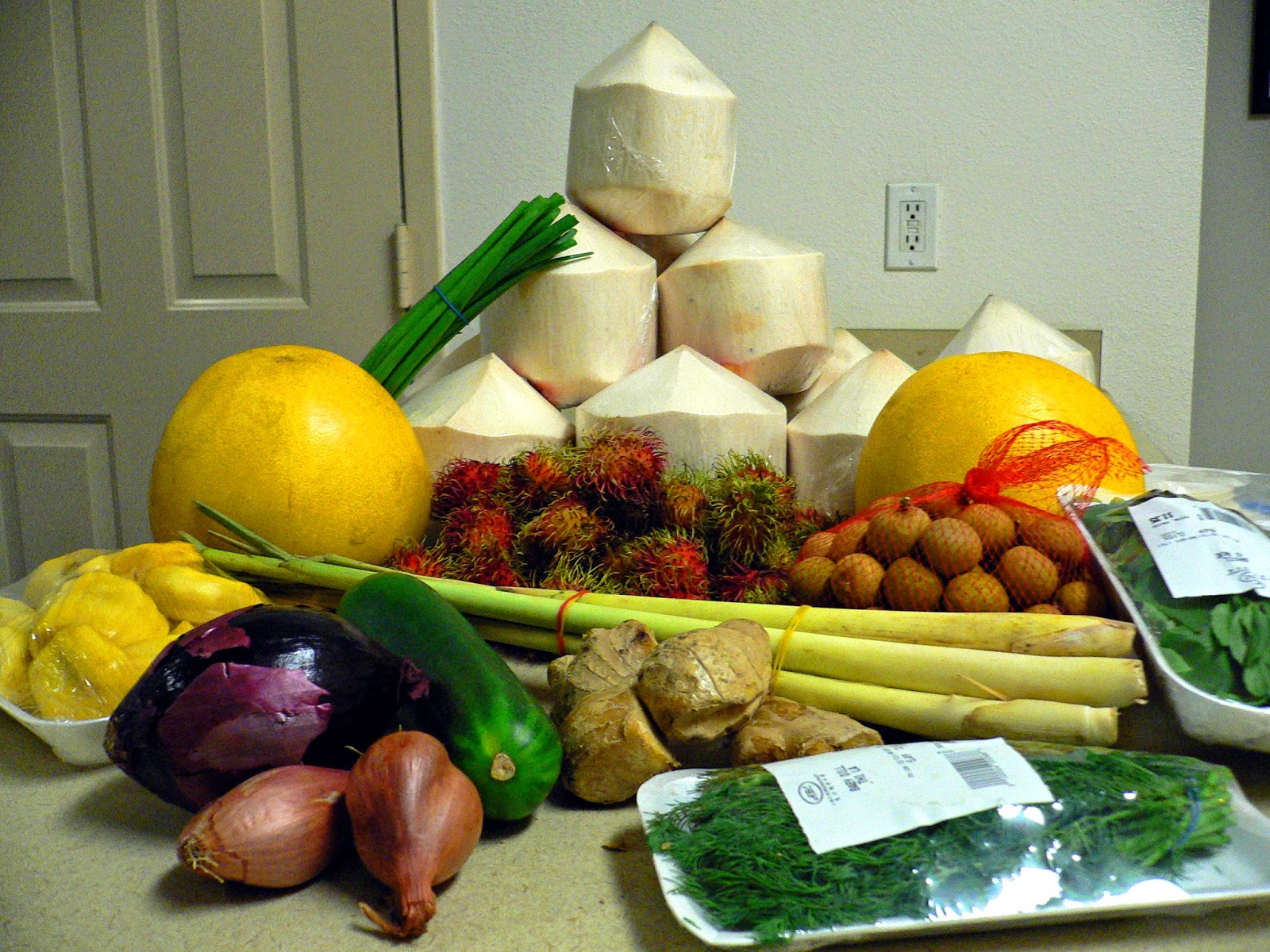
I laid out before them my sweet childhood, a treasure chest of juicy ripened jewels that included fresh mangosteen, rambutan, longan, dragon fruit, jack fruit, pomelo, and mango. Fruit in Vietnamese culture, especially around the lunar new year, has long been associated with the reoccurring themes of wealth, abundance, and Nature's bountiful reward for earnest work. It also plays a role in reminding us to be grateful for our sustenance and blessings, as noted in the well-known proverb, "Ăn quả nhớ kẻ trồng cây" ("When eating the fruit, remember who planted the tree"). Giving fruit to those you love is comparable to giving precious currency. 

Growing up in India and a celebrated culinarian in his own right, Ankoor had at least heard of, if not already tasted, some of these organic sweets. But sharing them with Matt, who has always been like a fresh canvas for me to freely color with exotic delicacies and cultural ideas, was absolutely thrilling.
"I remember the first time I had a mango. It wasn't that long ago."
"Matt, you never ate sweet, juicy mangoes growing up?!"
"My family would see them at the store... but we didn't know what to do with them!"
My casual late-night fruit tasting party was probably more of a treat for me than it was for them, as I had the pleasure of spending quality time with two of my dearest friends and gorging on nostalgic edibles. If this cross-cultural culinary exchange proved to be a success, then I knew I'd be ready to throw a genuine new year party.


Fresh fruit is ubiquitous in Vietnam, particularly at mobile street carts

Sharing my treasures with my best friend


Lychees, longans, rambutans, and mangosteens


Market in the central coastal town of Hội An

Two consecutive years, I attempted to bring the color and cuisine of Vietnam to my humble apartment by hosting a Tết dinner for friends who had essentially become a second family to me. Much like back in Vietnam, preparations started two weeks in advance as I lavishly decorated the ancestral altar, purchased small gifts, and contemplated my five-course menu. The most exciting part of the process involved making the journey to Garden Grove's "Little Saigon" and joining the masses of other Vietnamese immigrants in a chaotic shopping spree. Over the course of a week, eight trips were made to five different markets, spending just short of 300 dollars on raw ingredients alone. As food is serious business in Vietnamese society, no expense could be too great when honoring my Irvine family. The final stretch until Tết witnessed the most grueling (though no less riveting) task of four consecutive days of cooking. If Matt hadn't returned to help with the duck soup, I likely would've ended up cooking straight into the next year. The wonderful aroma of fresh lemongrass, coriander, mint, chili, galangal, and coconut wafting throughout the complex took me back to evenings in my grandmother's kitchen. Of her many specialties that I so delicately tried to recreate for my guests, personal favorites included:
  • Gỏi Cuốn - Fresh salad rolls with shrimp and peanut dipping sauce
  • Canh Vịt Dừa - Coconut milk soup of duck and bamboo shoots
  • Chim Cút Quay - Roasted quails with a glaze of honey, 5-spice, and lime
  • Chả Cá Thăng Long - Grilled cod marinated in tumeric and fennel
  • Thịt Bò Lúc Lắc - Wok-shaken steak with spiced soy sauce and rice vinegar
  • Bò Kho -  Beef stewed with tomato, lemongrass, and star anise
  • Cá Kho Tộ - Caramelized palm sugar catfish with green onion cooked in a clay pot
Preparing a banquet for ten people from scratch proved to be a valuable practice in patience and perseverance, reminding me of the hard work my parents endured to provide for me and our own family - entirely out of pure love. It also confirmed my family's personal philosophy on diligence, and how the quality of Life's rewards is directly proportional to the time and energy sincerely invested towards them. 


Vietnamese markets are always fun to explore and simply get lost

Ingredients for duck soup
Chopping up catfish steaks


Hand-wrapping fresh salad rolls with shrimp
Typical Southeast Asian produce
A sampling of some of my preferred dishes for the feast!
Getting more experience with mass cooking Viet dishes as the invite list grows every year!


Before any intense feasting could commence, important rituals first needed to be observed. It never ceases to amaze me how heartfelt and willing my friends were when it came to respecting my cultural heritage. On the eve of the new moon, I opened my door to each of them surprising me with chrysanthemums, orchids, and other floral bouquets to welcome the arrival of spring and connect with nature. Together before the sacred altar we gave thanks to our ancestors, many of them having brought photos of their own departed family members to grace the table beside mine. Solemn prayers were offered with the lighting of incense and the ritual burning of gold-leaf paper for the wealth of departed souls. After cracking open fresh coconuts, the ravenous feast ensued in an animated display no different from that with my own relatives. The evening was also largely spent laughing to several rounds of the traditional gambling game, Bầu Cua Cá Cọp, with winning bets marked by swigs of Vietnam's signature Ba Muoi Ba beer. And finally, no one could go home without receiving a red lì xì envelope of lucky money to promote a year of great prosperity. But the way I see it, one intimate night with the people I cherish was all I really needed to prove to myself just how prosperous my life already is. Besides, what good are Life's greatest treasures if you can't share them?

     
Celebrating my first Tết in Irvine, Year of the Snake. We all apparently felt intense Vietnamese pride that evening
Makeshift tables, but genuine friends


Ritual burning of gold-leaf paper


Traditional gambling with Bầu Cua Cá Cọp


Celebrating Tết 2014, Year of the Horse. It was a night I'll never forget

Celebrating Tết 2017, Year of the Rooster. First New Year party in my new house!
Celebrating Tết 2018, Year of the Dog. The party just keeps getting bigger and bigger!


Having the opportunity to share my traditions with such a loving and enthusiastic group of individuals served beyond simply bringing me honor and pride. It became a new story to inscribe on the colorful pages of my life, a grander memoir in a perpetual state of composition. And for once, it's a family story that focuses not on the pain of hardship, but on the pleasure of homecoming.

That night of the new moon, I naively waited for the Kitchen God to arrive, hoping he'd be able to spare some time for a few engaging tales. Alas he never showed, and I ultimately dragged myself off to bed rather tired and somewhat disappointed. It didn't occur to me until recently that the gentle spirit was actually there all along, telling me volumes of stories highlighting the importance of family, tradition, honor, and compassion - lessons to usher in the new year, every year, for the rest of my life.
"Cảm Ơn Bố..."

Thank you, Dad.
  
See how we celebrate Tet in California through my video!


Learn how to make Vietnamese coconut jelly dessert through my video!