|
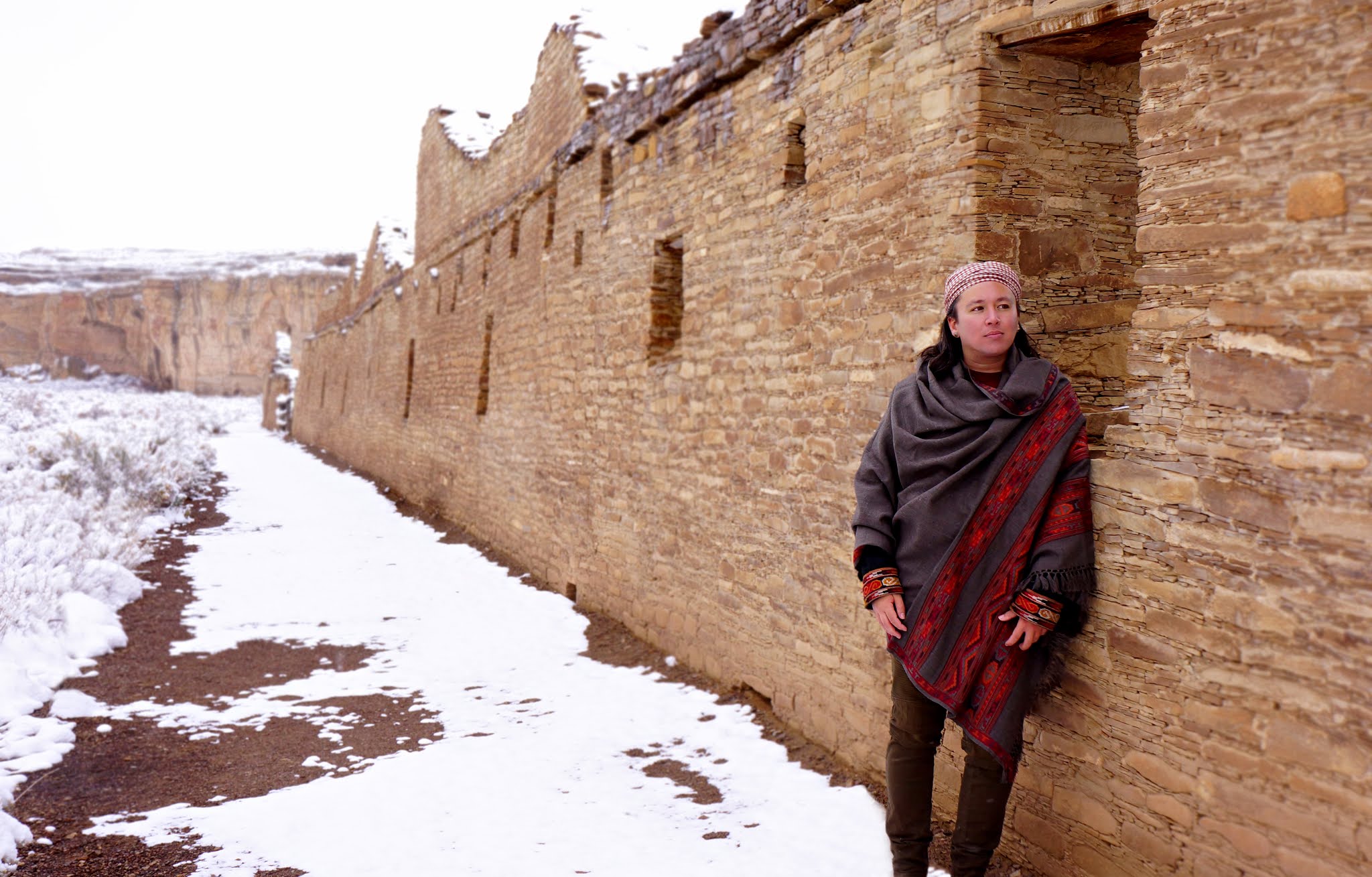
| "Country roads, take me home..." ... before Trump builds the border wall, thanks. |
When 28 year-old Luca Baldesi, a visiting Computer Science PhD student from the University of Trento, took his initial steps on American soil, he had no idea just how greatly his life was going to change. Following in the footsteps of Columbus, his arrival in the New World was a catalyst for what would hopefully become a fulfilling experience of adventure and discovery (outside of academia, of course). He came to conquer the West and, like his exploratory predecessor, he too was able to successfully trick a native into guiding him through the terrain and helping him settle into a land he would call "home" for the next nine months. But where these two stories diverge resides in the fact that the native actually gained something meaningful from the contact... in ways that I never could have imagined. This is the tale of an amazing, contemporary cross-cultural exchange between an Italian possessing an American spirit and an American possessing an Italian passport - two friends that would ultimately become
fratelli.
UC Irvine is a haven for Italian graduate students. It's a fact to which I can testify from my own studies back in a laboratory where one could spend the entire day without hearing English, and where the only apparatus that ran more than the centrifuge was the espresso machine in the faculty lounge. So when Paola invited me to an off-campus Pasqua (Easter) lunch organized by some Italian students, nothing seemed out of the ordinary. "You're Italian too, so you shouldn't feel out of place." Indeed, unbeknownst to many, I am legally an Italian citizen, despite never having lived there nor having ethno-cultural ties to the republic. But that's a story for another time.
 |
| Easter 2016, the day the Native met the European conqueror |
It was somewhere between the pasta and the panettone that Luca and I first made contact, his shy demeanor and clear sense of unfamiliarity simply begging for a big blown-out American welcome. In light of an unfortunate "turn of the tide" concerning some other friends in my life, the chance to explore new oceans of interesting people could not have come at a more opportune time. Our conversation was engaging and impassioned, even in spite of the occasional difference of opinion, factors that in fact added a unique dynamic and depth of perspective to topics we'd eventually discuss in greater detail over the rest of the year. There was something unique in Luca, and it dawned on me that he had the potential to serve as a fresh blank canvas upon which I could paint a new friendship using the finest colors California and the Southwest could offer. And there was already more that I wanted to do and share with my new guest than I felt I had the time for, a mental rush that re-ignited the once fading flame of excitement, challenge, and local pride in my life. I had my work cut out for me, for even Michelangelo couldn't paint the Sistine Chapel in only one day.
With my travels and some tour guiding experience, I set to work on an ambitious nine-month itinerary/bucket list that I hoped could capture some fraction of the cultural, geographical, and (a personal favorite) gastronomic diversity of my home state and neighboring regions. Luca himself had already become fond of the phrase "mission accomplished" as a means of gradually tallying the American exploits I aimed to make possible for him. But as much of a learning experience I envisioned this to be for my newfound companion, I knew this could potentially be a rewarding opportunity for myself to learn the authentic Italian way - outside of tourist guidebooks, movie stereotypes, and inauthentic online recipes. My first lesson immediately took the form of a stern command to never rinse boiled pasta under cold water, under any circumstances. I was anxious to swap more American sights for Luca's Italian insights.
 |
| Luca explores "The Slot" |
 |
| Off-roading through the canyons of Anza Borrego desert |
 |
| Losing ourselves in the rocks |
 |
| Luca was baffled by the lack of "shadow" under which to escape the sun |
Hearing about Luca's life back in Italy, as the heir to a modest "palazzo" situated among the iconic rolling hills of Tuscany, was like listening to the screenplay of some romantic movie, one that even Julia Roberts' melodramatic
dolce far niente monologue couldn't do justice. His vivid descriptions sent me floating through the temperate green countryside of his family's olive orchards and vineyards, imagery that sharply contrasted with our jolting Jeep ride in the searing summer heat of dusty desert trails in Anza Borrego. Coming from the class and luxury of one of Europe's most renowned urban regions, I was fully aware of the risk in knowing that Luca would either come to truly love or completely loathe the realm of shabby New World nomadism into which I had plunged him. Deep down for me, our first off-roading excursion was a test and right of passage to see if Luca would be suitable for even longer and rougher recreational road trips through which the mighty Southwest derives its fame. And aside from the minor burns of his age-old nemesis, that beautiful blazing ball in the sky, I was so pleased to see that Luca was both satisfied and enthusiastic for more awesome adventures. So long as there was a shower nearby. Okay, and maybe a mattress. Oh, and air-conditioning...
Raised on Spaghetti Westerns and the adventures of
Tex Willer, a vintage Italian comic cowboy, Luca long had the spirit of the Wild West already flowing through him. Suddenly, the thrill of making his cinematic and comic fantasies a reality completely overtook me, even to the point of casting blonde built Luca as a real life Tex and envisioning myself as Tiger Jack, Tex's cliched Navajo sidekick; I'd been mistaken for Native American so many times, anyway. In the remaining seven months, our road trips took us hiking across some of the most famous
desert landscapes in my part of the country, including Joshua Tree, the Mojave, and even as far as the narrow gorges of Zion Canyon in Utah and the cactus-filled Superstition Mountains of Arizona. With so many "missions" checked off the bucket list and the number of nearby US destinations dwindling, we were even forced to dip South of the Border for an additional tequila-fueled excursion, one that ultimately left Luca cruising a nice straight path to "mission accomplished"
while, much to my chagrin, left me incapable of even walking in a straight line.
 |
| We made it past the an old mine to the mountain overlooking Joshua Tree National Park |
 |
| Seriously refreshing times at Deep Creek Hotsprings |
 |
| Tex and Tiger get wet and sandy while exploring The Narrows of Utah's famed Zion National Park |
 |
| Resting in the boiling heat of Arizona's Superstition Mountains |
 |
| Luca saw plenty of massive rocks... |
 |
| ...and numerous giant cacti |
 |
| I Quattro Italiani conquered Angel's Landing in Zion National Park |
Even with many long hours spent mostly on the open road, Luca's conversations and observations never failed to shorten vast distances and make time fly by so effortlessly. From critiquing political
buffoni (Trump versus Berlusconi... who's worse?) to judging different olive oils (quite a sensitive topic for him), I learned just how critical and vocal Luca could be about virtually any subject. But even while many passionate debates ensued, a simple joke or whimsical sound effect released from his smiling mouth was all it took to return us to laughter and light-hearted spirits. Learning his foreign perspective on concepts Americans don't think much about was always most intriguing and entertaining, to name a select few:
- Americans love flat-bed pick-ups. Especially of the large and obnoxious Dodge Ram variety.
- Americans rely heavily on trailers and are always towing things with aforementioned pick-ups. This ultimately turned into a photo project for Luca, capturing some of the many absurd things being pulled along our highways. It also nearly got me into several accidents.
- Americans have no qualms about fusing different foods and ingredients together. Kim-chi Burritos? Mexican Lasagne? Avocados on spaghetti? Marshmallows on yams? Maybe some things are definitely not meant to be mixed.
- Americans lack social lives during the week. Honey, ain't nobody got time for social lives when you're a slave to capitalism!
- Americans always find the need to classify things, including themselves, along ethnic identity lines. Maybe not an issue in relatively homogeneous Italy, but then again, is it even really necessary? Is it a matter of personal pride or a potential means of social division?
- Americans do everything Italian WRONG. Spaghetti with meatballs - nope! Misspelled Italian signage in Euro-themed Las Vegas casinos - nope! Supermarket products claiming to be "prosciutto" and "mozzarella" - nope and nope! Talking loud with excessive hand gesturing - extra nope!
Whether perplexed or outright perturbed by his American discoveries, I was nonetheless pleased to see that Luca was at least
experiencing. After all, what would be the point of traveling away from home if it didn't thrust you at least once out of the zone of familiarity... or even sanity?

Long road trips were also filled with a plethora of delightful linguistic exchanges, as I tried to improve Luca's English grammar and accent while he tried to teach me basic Italian phrases and colloquialisms. For him, short versus long vowels were a challenge (
"sin" versus
"seen"), while I simultaneously struggled with memorizing Italian articles (
"i, il, la, le, lo, gli..." - why so damn many?!). The best part of any conversation was simply sitting back and listening to Luca's phrasing and pronunciation, which all too quickly crossed the line from adorable to downright hilarious. Take for example, when helping Luca buy his first car:
- "Back in Italy, a girl bump'ed me in my rear" - "Back in Italy, a girl rear-ended my car"
- "I should get a soov like everyone else" - "I should get an SUV like everyone else"
- "This car is the sheet. I need this mission accomplished" - "This car is shitty. I need to succeed in this car search."
- "I test drive'ed the car. I now am a owner of a hee-yoon-dai!" - "I test-drove a car. I now own a Hyundai!" ("huhn-deh")
While my English lessons focused on formality, Luca's Italian teachings almost always fixated on vulgarity.
"Tu ma' maiala! Che cazzo fai?! Porca puttana! Dio becco! Dio cane! Dio merda! Dio Dio Dio...!" Had they not been exclaimed in a melodious Italian accent, or if I had actually understood their meanings, my ears would likely have bled out from the sheer number and combinations of profanities he could utter in a single breath.
Mama mia, who knew that Italian could be as raunchy as it is romantic?! But blasphemy aside, I took pride in realizing that my knowledge of Italian via his valuable lessons slowly began to transform from virtually nonexistent to somewhat conversational, as Professore Luca was always ready to teach and respond... and usually correct my wrong definite article. And when our own language absurdities weren't enough, we could always rely on Adriano Celentano's hilarious Italinglish classic,
"Prisencolinensinainciusol", to fill the rare moments of silence.
 |
| My Italian started off very simple.. ..then got a little more complex with time.. ..while some things are untranslatable.. |
 |
| Luca even made me a flow-chart for Gli Articoli Italiani |
Every bilingual discourse was a treat. The only downside to our conversations was the fact that the more time I spent with Luca over the months, the better his English got - and subsequently less comical. But every so often and even now, I still recall some of his awkward tongue-tied moments, smiling to myself with an ever so subtle chuckle.
"Ah... ahhh... Achooo!"
"Cheers!"
"Nope. Try again, Italian"
 |
| His beloved "Hee-yoon-dai", complete with AC and broken sun visor |
When the two of us weren't discussing language, we were usually talking about food. Cooking and cuisine played an absolutely essential role, not only in the enhancement of Luca's American odyssey, but also in the personal development of our friendship. Both hailing from heavily food-oriented cultures, all the while living in one of the most diverse gastronomic regions in the world, we were anxious to share with each other the very best and most authentic eating experiences. Luca was an archetypal Italian cook in the kitchen, constantly ordering me to "
put more passion and love into the food", as I frustratingly wrestled with a stubborn lump of pizza dough. He taught me Italian culinary fundamentals entirely from scratch, setting the kitchen ablaze with the simply-prepared but complex aromas and flavors of
spaghetti al pomodoro,
pizza toscana, and, with additional instruction from our dear friend Federico, the art of
lasagne al forno. And whenever I began to feel overworked from tour-guiding, party-planning, or simply everyday life, Luca always knew how to relieve my stress with homemade
tiramisu,
cantuccini, and
rose del deserto cookies. Of course, he eventually taught me that a couple of beers could also do the trick, and usually in half the time.
 |
| We both take food very seriously |
 |
| Luca teaches me spaghetti al pomodoro! |
 |
| Luca teaches me pizza toscana! |
 |
| Luca cuts his very first Thanksgiving turkey with an electric knife |
 |
| Learning to make Nonna Pasini's lasagne al forno entirely from scratch. Thanks for Federico Pasini for the tutorial! |
With Luca constantly coming over for cooking experiments, my home could best be described as the intersection where the Silk Road collides with the Columbian Exchange. In trading for his knowledge of European bread making, pasta types, and wines, I tried to introduce Luca to the spices, tropical fruits, and exotic meats of the Middle East, India, and Southeast Asia. Holidays at my place were the best occasions for my own epic culinary showcases, celebrating everything from Islamic
Eid al-Adha to Hindu
Diwali, and from the Vietnamese Mid-Autumn Moon to an all-American Thanksgiving - each with its own distinct multi-course menu. Whether it be savory lamb tajines or spicy coconut curries, braised catfish claypots or boiled duck fetuses, I didn't hold back when it came to proudly stirring up a storm of Eastern delicacies for Luca. And when my kitchen was closed, touring around California's many ethnic eateries gave him a chance to try for the first time Ethiopian
injera, Gujarati
thali, and Korean
bulgogi, among many other international things. And even when those places weren't within reach, we somehow managed to always end up at Luca's favorite Japanese food-court in Mitsuwa Market for some cheap, delectable sashimi bowls.
 |
| A menu of Near Eastern specials for Luca on Eid al-Adha |
 |
| A menu of South Asian specials for Luca on the festival of Diwali |
 |
| A menu of Grandma's Vietnamese specials for Luca for the Tết Trung Thu moon festival |
 |
| Luca's first time eating Gujarati (Western India) thali |
 |
| Luca's first time eating Ethiopian quanta fir fir... oops... |
 |
| Luca eats his way through Mexico with birria (goat stew), tamales (stuffed corn flour), and pescado frito (whole fried fish) |
Being a personal tour guide, particularly to someone who was starting to feel more like family than merely a friend, specifically revealed to me a unique and previously unknown form of symbiosis. On one hand, the most routine activities and ordinary destinations that define my life suddenly took on a whole new perspective, higher levels of exhilaration and appreciation when seen through Luca's lens of novelty. I felt proud and honored to provide him with many memorable first-time experiences, including taking him to a
Native American pow-wow on a tribal reservation, an Asian-style night food market, several classic Californian full moon drum circles, a Tuareg nomad rock performance, and even his very first surfing lesson. Luca even survived the mayhem of his first American presidential election at the pub, where no matter the outcome, drinking was destined to ensue. In some curious "passing of the baton", I almost felt like I had taken over the guiding role that
my best friend, Captain Matt, had once held in my life. Knowing that deep in my heart, I felt satisfied believing that I had shared the best of Southern California, both culturally and recreationally, with a cherished companion who was always available and anxious to share those experiences with me. As for Luca's peculiar but totally jestful fetish with redneck lifestyle and SoCal "bro" culture, well, there are some oddities for which I can't be held responsible!
 |
| Taking Luca to his first surfing lesson |
 |
| Luca's first time batting a baseball |
 |
| Jamming at a classic Cali-style full moon drum circle on the beach |
 |
| Luca meets real Native Americans (apparently, I wasn't native enough) |
 |
| Luca's first experience eating his way through an Asian night food market |
 |
| Our very first baseball match. The Angels lost. But he's still a #1 fan! |
However, the most interesting aspect of our symbiotic friendship went beyond merely the Italian culture that Luca taught and shared with me in return. Ironically, gallivanting around with him actually introduced me to a number of American experiences that I've never grown up with, helping me to learn even more about culture and social life in a country I thought I had already known. Had it not been for his curiosity and voracious appetite for "missions accomplished", I likely would have never gone to my first Angels baseball match, or exhausted myself playing DDR at the local video game arcade, or nearly gotten trampled by punks in a grungy Phoenix mosh pit, or felt uneasy exploring a redneck gun shop filled with assault weapons, or had to be carried out of a cantina after one too many margaritas - simple adolescent and collegiate activities in which I could never have imagined myself taking part. Luca's European tendencies certainly caught me playing catch-up in the drinking game, essentially bringing a temporary end to a self-imposed sobriety extending more than two decades. Lastly, his more extensive knowledge of American pop culture added new songs to our primarily "ethnic" road trip repertoire (most notably, John Denver's
"Country Roads"), while traveling at odd hours of night in his Hyundai saw us frequent greasy midnight dinners at Denny's far more than we probably should have.
 |
| Luca shows me how to drink away misery after Trump's shameful victory |
 |
| Feeling a little tipsy at Hussong's in Mexico |
 |
| Who would've known I'd actually kick these guys' asses at bowling? |
 |
| Luca unfortunately pulls off the "bro" look quite well... |
Finally, knowing Luca directly opened the door for the arrival of a whole new
family of Italian, European, and other American friends in my life. Remarkably, nearly all of them contributed as much meaning and value to my existence over the course of months as friends whom I've known for years. Whether jamming with Allie along to Federico's whimsical guitar ballads, or attempting not to snap from Matteo's beach yoga sessions with Matt, or getting sticky cooking lemon meringues alongside Jana's Slovakian apple strudels, my global family continued to grow and enrich our collective experience, one intimate moment at a time. The adventures we undertook, the meals we shared, and the music we made were all testimonies to how beautiful and balanced one's life can be when the right people have an active presence in it. And though many of them were sadly destined to return to Mama Europa, the legacy they left on my thoughts, beliefs, and personal strength in moving forward during such a difficult year essentially marked the start of the next great chapter of my ever-evolving life.
 |
| My Italian brothers and I on an amazing Southwest journey |
 |
| Gruppo Quattro Pazzi was one of the best bands in my life |
 |
| After hanging with these guys so much, I'll have to take up surfing again. Luca left his "surf table" in safe hands! |
 |
| Will never forget midnight jams and sing-along times in Fede's "jungle" |
 |
| Celebrating an epic Diwali with the family |
 |
| Celebrating Allie's PhD graduation with the core family |
 |
| It took a bunch of anxious Europeans to get me to host our first successful authentic American Thanksgiving feast |
 |
| Cooking up a storm for Luca's and Jana's final farewell dinner |
 |
| Many great moon-filled memories on the beach |
 |
| Amo i miei fratelli italiani! |
It never ceases to amaze me how much Luca and I were able to accomplish in such limited time. And I'm not speaking simply of the sights we beheld and the adventures we undertook together. In many respects, our nearly year-long evolution from complete strangers to modest acquaintances, then from close friends to intimate brothers, is a testament to the beauty of Life's blissful passing, remarkable adaptability, and surreal slowing of time. Indeed, it would ultimately seem as if an entire lifetime had passed between the day he arrived and the day he left. We were there for each other, witnessing ourselves excel and endure during both the great or not so great moments throughout a crazy year, a year of growth be it physical, mental, or even emotional. And whether or not my presence will have any lasting effect for Luca wherever he ends up, I know for certain that his influence will leave a permanent mark in my colorful book of life stories, the gift of a fulfilling exchange that I wouldn't trade for anything else in the world. In the end, I learned more than merely what it means to be Italian, or even American for that matter. I learned what it means to be simply human.


When 28 year-old Luca Baldesi, a visiting Computer Science PhD student
from the University of Trento, took his initial steps on American soil...he had no idea just how greatly my life was going to change.
Per Luchino, il mio caro fratello italiano... You know nothing... Good, good...